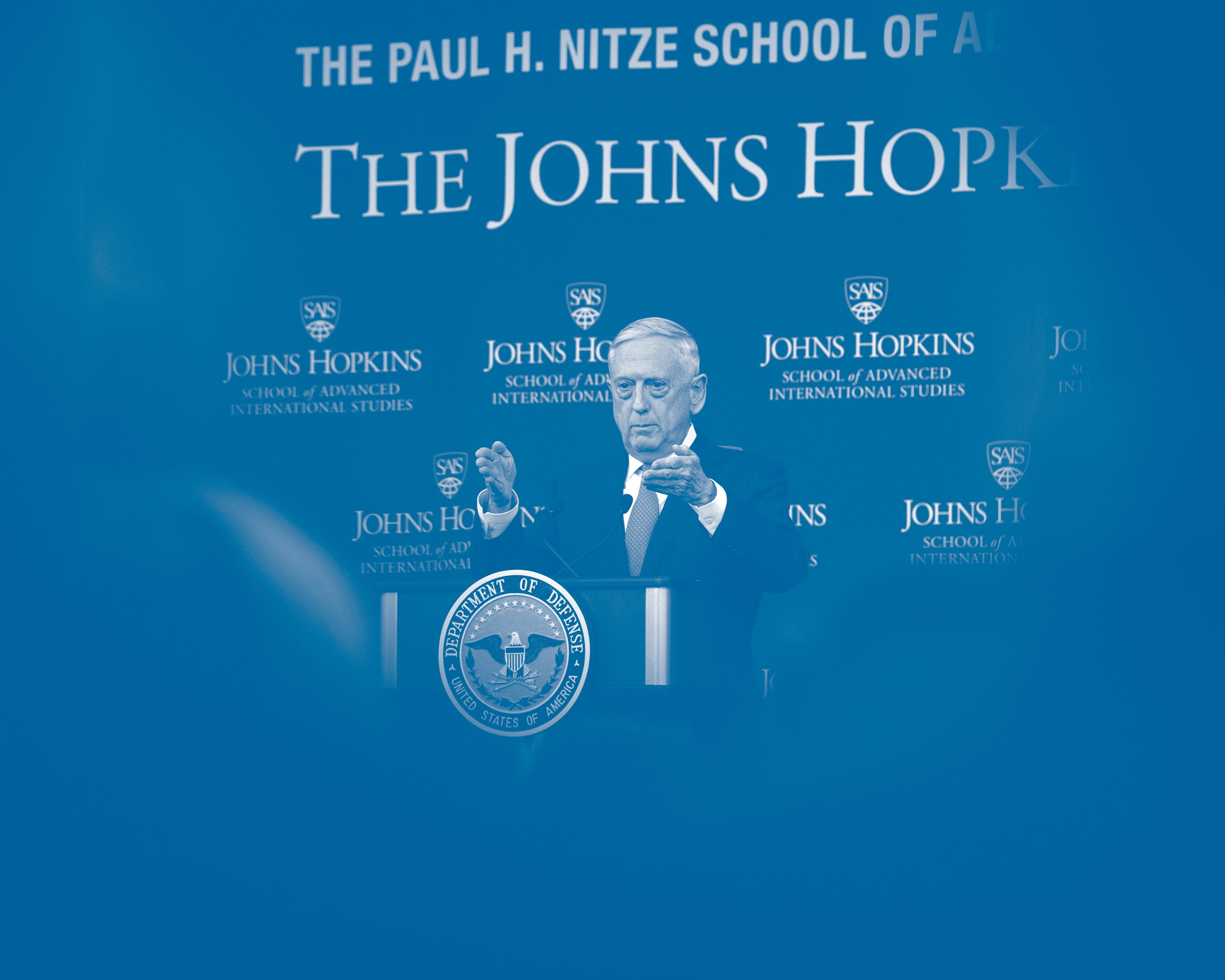
“The US has an enduring interest in preventing Europe from falling under a potentially hostile hegemon”

In the context of the recent US National Security Strategy, we bring to your attention an interview with undersecretary of war for policy Elbridge Colby, largely credited with its conceptual paternity. The interview was conducted by our colleague Octavian Manea and published by GlobalFocus Center in 2019 on its editorial platform Eastern Focus.

Interview with Elbridge Colby, Director of the Defense Program at the Center for a New American Security. He was Deputy Assistant Secretary of Defense for Strategy and Force Development from 2017 to 2018, during which time he served as the lead official in the development of the 2018 National Defense Strategy (NDS) and the DOD’s principal representative in the development of the 2017 National Security Strategy (NSS).

Eastern Focus Call For Contributions: The World After Tomorrow

Eastern Focus digital quarterly is launching a call for contributions to its fourth issue, dedicated to exploring The World After Tomorrow (i.e. how will the world change after COVID-19?) from a regional perspective. The whole issue will be framed around disruption/disruptive glocal trends (political, economical, geopolitical) and aims to anticipate the parameters of the post-pandemic new normal and their impact on the broader region. Articles that are focused on the structural trends with a long-term impact are prioritised.

Working classes: acquired political conscience in Communism leading global anti-elite resistence today

In 1973, Katherine Verdery moved to Romania, the only country in the Eastern European bloc that welcomed Western scholars. She studied social inequality, ethnic relations and nationalism. After the fall of Communism she returned and looked at the transformation of socialist societies. Her most recent book, My life as a spy: Investigations into a secret police file was published in 2018, and it documents how the Romanian political police kept her under surveillance.

Where did the West fail in transforming Eastern Europe?

By Barry Gaberman, Merrill Sovner and William Moody | New York

The 1990s ushered in an era of widespread governmental support for liberal democracy and an opportunity to build civil society in countries where there had long been a dearth of public space separate from government control. There was optimism bordering on euphoria and a general belief that liberal democracy was the model of the future. This was an environment in which outside funders saw an opportunity to have an impact and were willing to seize that opportunity, even though their expertise in the region might have been modest in the beginning.